Building Strong: A Multi-Story Concrete Structure
Explore the science of engineering and construction by building a miniature multi-story building using a simple concrete mix. Learn about structural forces, foundations, and why buildings stand up.
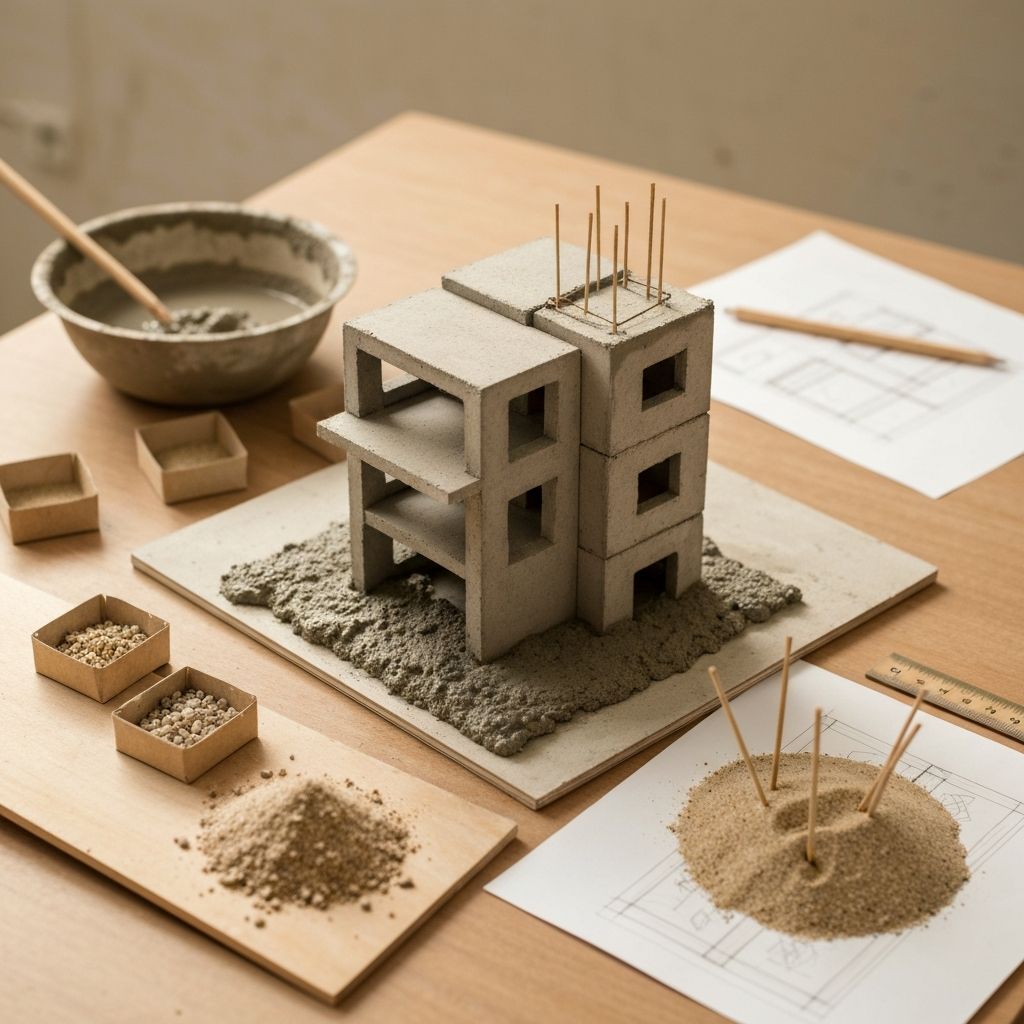
# Building Strong: A Multi-Story Concrete Structure
## Overview
In this project, young engineers will learn the basics of structural engineering by designing and building a small multi-story structure using a simple concrete mix made from locally available materials. Through hands-on construction, students will discover how forces like gravity, compression, and tension affect buildings, and why foundations matter.
## What You Will Learn
- How concrete is made and why it is strong
- The role of foundations in keeping structures stable
- Basic principles of compression and load-bearing
- How engineers plan before they build
- Teamwork, measurement, and problem-solving skills
## Materials Needed
- Cement powder (a small bag is enough)
- Sand and small gravel
- Water
- Small cardboard boxes or wooden molds (for shaping each floor)
- Thin sticks, wire, or small bamboo pieces (to act as reinforcement)
- A flat board or thick cardboard as a base
- A ruler and pencil
- Plastic sheet or old newspaper to protect your workspace
- A mixing bowl or bucket and a small trowel or spoon
## Safety Note
Always wear gloves when handling cement. Work in a well-ventilated area. An adult should supervise the mixing process. Wash hands thoroughly after working with concrete.
## Process
### Step 1: Design Your Building
Before mixing anything, draw your building on paper. How many stories will it have? How wide will the base be? Engineers always plan first. Decide on 2-3 stories to start. Remember: the base must be wider and stronger than the top. Sketch the front view and label each floor.
### Step 2: Prepare Your Molds
Use small cardboard boxes or build simple rectangular molds from cardboard and tape. Each mold represents one floor slab. Make the ground floor mold slightly larger than the upper floors. Line the inside of each mold with plastic so the concrete does not stick.
### Step 3: Mix Your Concrete
The basic recipe: mix 1 part cement, 2 parts sand, and 3 parts small gravel. Add water slowly and stir until the mixture is thick like porridge but not too wet. This is similar to how real concrete is made on construction sites across Ethiopia.
### Step 4: Build the Foundation
Pour your first layer of concrete into the base mold. This is the foundation, the most important part. Press it down firmly to remove air bubbles. If you have thin sticks or wire, lay a few pieces in the concrete as reinforcement, just like real buildings use metal rebar. Let it dry for 24 hours.
### Step 5: Add the Upper Floors
Once the foundation is solid, place your next mold on top and pour concrete for the first floor slab. Add small reinforcement pieces. You can use thin sticks as columns between floors for extra support. Repeat for each story. Let each layer dry before adding the next one.
### Step 6: Test and Observe
Once your building is fully dry (give it 2-3 days), carefully remove the molds. Gently press on the top. Does it feel strong? Try placing small weights on top. How much can it hold before you see cracks? Where do the cracks appear first? Record your observations.
## Age Adaptation
- **Ages 6-8**: Build a single-story structure. Focus on mixing and shaping.
- **Ages 9-11**: Build 2 stories. Introduce the concept of reinforcement.
- **Ages 12-14**: Build 3 stories. Experiment with different concrete ratios and test load-bearing capacity.
## The Science Behind It
Concrete is strong in **compression** (being squeezed) but weak in **tension** (being pulled). That is why real buildings add steel rebar inside concrete, the steel handles the tension while the concrete handles the compression. When you add sticks or wire to your model, you are doing the same thing engineers do on real construction sites.
## Cultural Relevance
Ethiopia has a rich history of remarkable construction, from the rock-hewn churches of Lalibela to modern high-rise buildings in Addis Ababa. This project connects students to the engineering tradition that has shaped Ethiopian cities and landmarks for centuries.
## Discussion Questions
1. Why must a building's foundation be wider and heavier than its upper floors?
2. What happens to a concrete structure if you skip the reinforcement?
3. How does the ratio of cement to sand affect the strength of concrete?
4. What forces act on a tall building during strong winds?
5. Can you think of famous buildings in Ethiopia and what makes them structurally impressive?
Project Details
Difficulty
Age Range
Ages 8-14
Estimated Duration
3-5 days
Category
engineering
Ready to Start?
This project is designed to help students learn by doing. Gather your materials and follow the steps to begin your learning journey.
Share Your Project Results