My First Garden: Growing Vegetables from Seeds
Learn the science of plant biology by building a simple gardening kit and growing your own vegetables from seed to harvest. Discover how sunlight, water, and soil work together to create life.
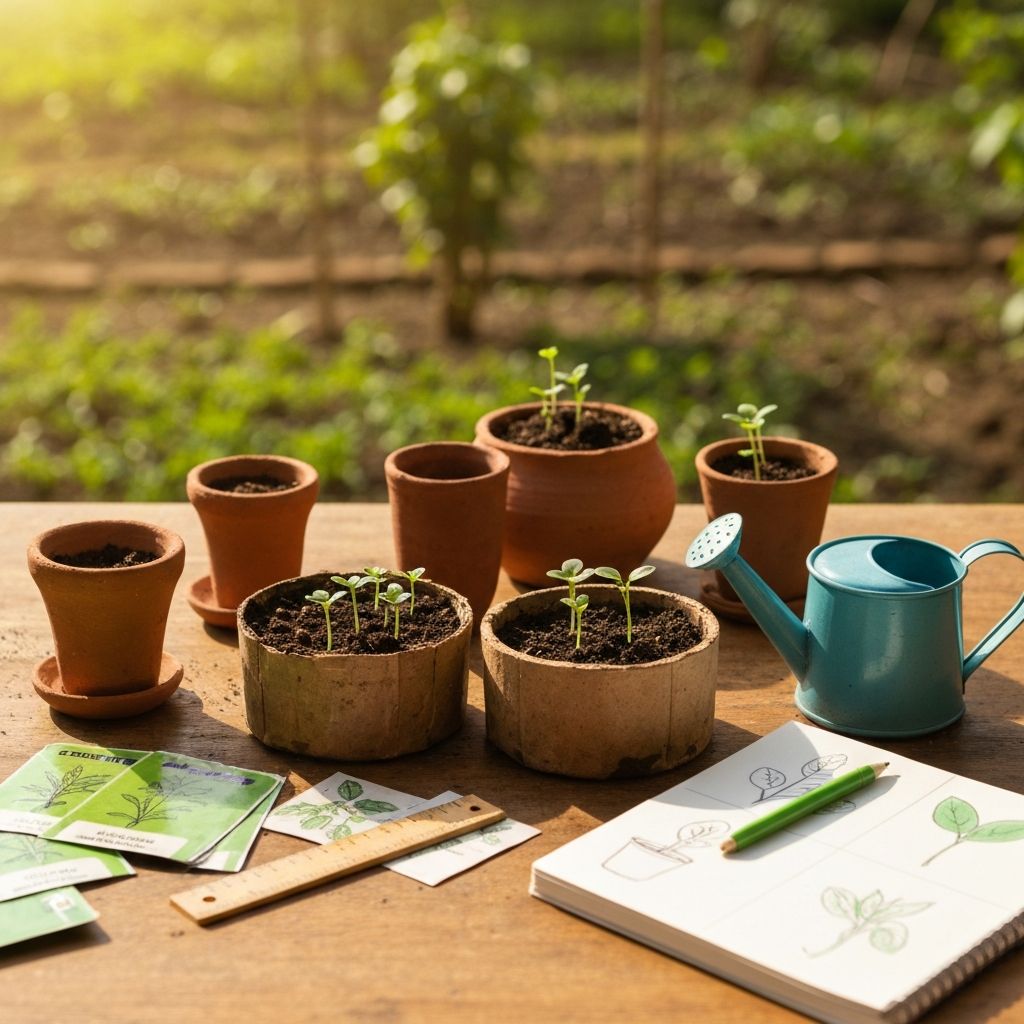
# My First Garden: Growing Vegetables from Seeds
## Overview
This hands-on project teaches young learners the fundamentals of plant biology, ecology, and patience through building a simple gardening kit and nurturing vegetable seeds into thriving plants. Using locally available materials, students will observe the full life cycle of a plant while learning scientific observation and record-keeping.
## What You Will Learn
- How seeds germinate and what conditions they need
- The role of sunlight, water, and nutrients in plant growth
- Basic soil science and composting
- Scientific observation and journaling
- Responsibility and patience through daily care routines
## Materials Needed
- Small containers (recycled cans, plastic bottles cut in half, or clay pots)
- Soil or compost from your area
- Seeds (lettuce, tomatoes, beans, or local vegetables)
- Small stones or gravel for drainage
- A watering cup or small bottle with holes in the cap
- A notebook for your plant journal
- A ruler for measuring growth
## Process
### Step 1: Build Your Gardening Kit
Collect your containers and clean them thoroughly. Poke small holes in the bottom for drainage. Add a layer of small stones at the bottom, then fill with soil leaving about 2cm from the top. Label each container with the type of seed you will plant.
### Step 2: Plant Your Seeds
Read the seed packet or ask an adult about planting depth. Most small seeds go about 1cm deep. Place 2-3 seeds in each container, cover gently with soil, and water lightly. Place your containers where they will get sunlight for at least 4-6 hours daily.
### Step 3: Observe and Record
Every day, check on your plants. Water them when the soil feels dry to the touch. In your plant journal, draw what you see and measure any growth with your ruler. Note the date, weather, and any changes you observe. When did the first sprout appear? How fast is it growing?
### Step 4: Thin and Tend
Once seedlings are a few centimeters tall, keep only the strongest one per container. Continue watering and observing. Watch for the first true leaves to appear. Discuss with friends or family: why do plants grow toward the light? What happens if you move them to a shadier spot?
### Step 5: Harvest and Reflect
Depending on what you planted, your vegetables may be ready in 4-8 weeks. Harvest your produce and share it with your family. In your journal, write about what surprised you, what was difficult, and what you would do differently next time.
## Age Adaptation
- **Ages 6-8**: Focus on observation and drawing. Use fast-growing seeds like beans.
- **Ages 9-11**: Add measurement and graphing of growth over time.
- **Ages 12-14**: Introduce controlled experiments (different amounts of water or light).
## Cultural Relevance
Gardening connects deeply to Ethiopian agricultural heritage. Ethiopia is one of the world's centers of crop diversity, with unique varieties of teff, coffee, and enset. This project honors that tradition while building scientific thinking skills.
## Discussion Questions
1. Why do roots grow downward and stems grow upward?
2. What would happen if a plant got no sunlight at all?
3. How is the soil in your area different from soil in other places?
4. Why is biodiversity important for food security?
Project Details
Difficulty
Age Range
Ages 6-14
Estimated Duration
4-8 weeks
Category
biology
Ready to Start?
This project is designed to help students learn by doing. Gather your materials and follow the steps to begin your learning journey.
Share Your Project Results